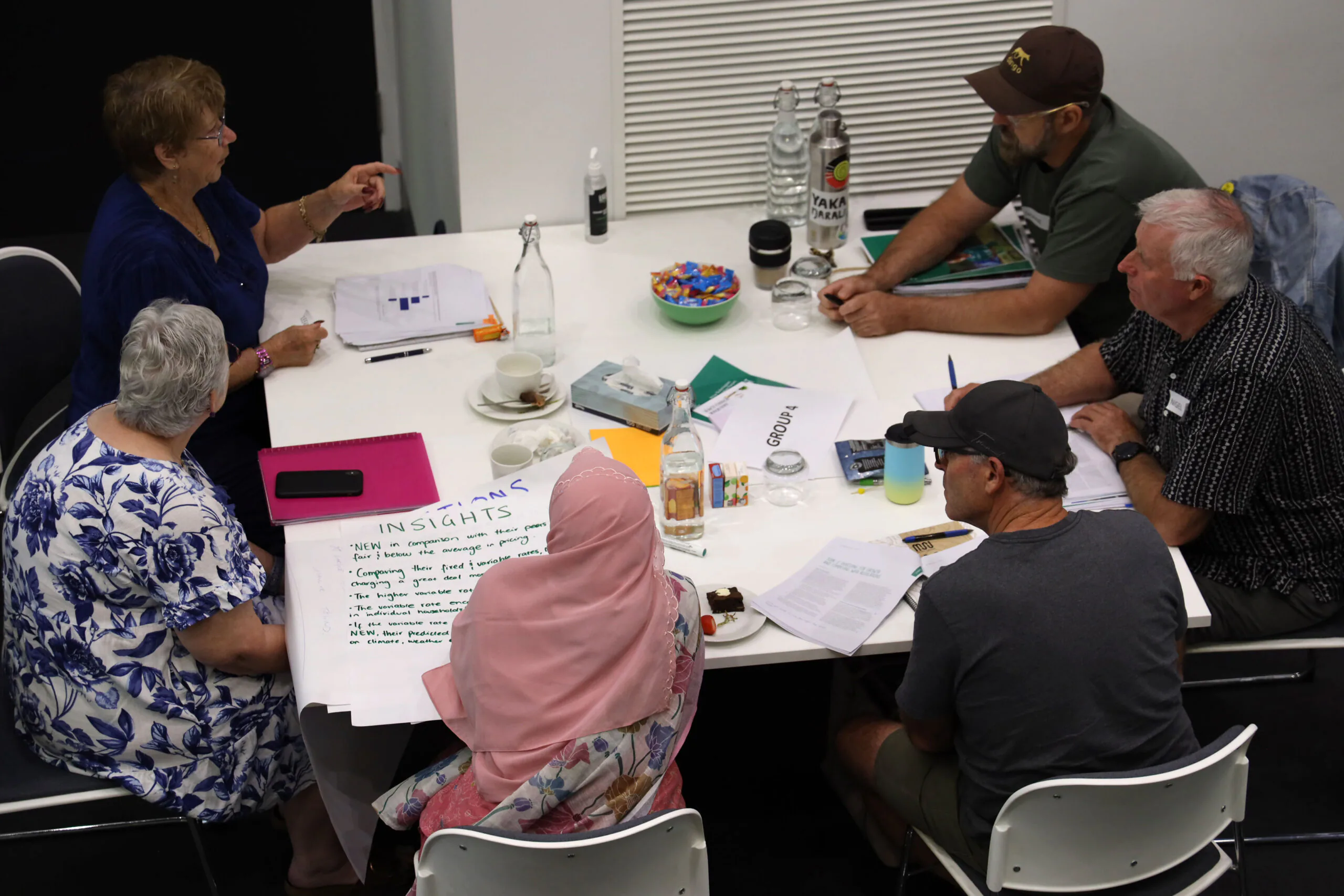
Engagement is one of the ways communities participate in democratic decision-making. Done well, it gives people a meaningful opportunity to shape decisions that affect their lives, services, places and futures. Done poorly, it can reinforce the very exclusion it is intended to address.
For councils, water corporations and other highly regulated organisations, inclusive engagement is part of how decisions are made and explained. Engagement must be designed to meet consultation requirements, demonstrate fairness, manage risk, and show how input has informed decisions. Increasingly, regulators, auditors, and communities are looking not only at whether engagement occurred, but at who was heard, who was missing, and whether people had a reasonable opportunity to participate. This scrutiny is sharpening because consultation that only reaches the most available, confident or familiar participants is less likely to be seen as credible, even when the formal process has been followed.
Most people who plan and deliver engagement are not trying to exclude anyone. The exclusions usually come from the way engagement is designed under pressure: tight timeframes, formal governance processes, technical subject matter, limited budgets, and decisions that cannot always be shared in full. The commitment to inclusive engagement therefore needs to be built in from the beginning.
To inform this piece, Tingwall spoke with people who are less heard in many engagement processes, and with organisations that work alongside them. They shared their time, personal experiences and practical knowledge. Their words appear throughout this piece as direct quotes.
“Hard to reach” or “less heard”
The phrase “hard to reach” is common in engagement practice. Used uncritically, it can place responsibility on the people least heard. Often, the barrier sits in the engagement process: how people are invited, what is asked, how information is provided and whether participation is practical for them.
Who is less heard will differ between communities, projects, and places but often includes Aboriginal and Torres Strait Islander peoples; multicultural and multifaith communities; people with disability; young people; older people; LGBTIQA+ people; people experiencing social or economic disadvantage; carers; people living in regional areas; people who have experienced trauma; women; and veterans.
This list is context-specific and not exhaustive. People may belong to more than one group, and barriers can compound. A young person with disability in a regional area, for example, may face different barriers to a young person in a metropolitan setting, or an older person with limited digital access, or a carer with little control over their time.
The practical point is simple: inclusive engagement starts with asking who is affected by the decision, who is less likely to participate through standard approaches, and what would need to change for their participation to be meaningful.
“Being young in itself is a barrier, young people can already feel disenfranchised, if they are LGBTQI+ or First Nations or have a disability they likely have increased barriers to engagement.”
“People that are really harder to reach often don’t have the required skills or support to engage, and they often won’t reach out to you…they’ll just go well, it’s in the ‘too hard’ basket and just leave it.”
Why inclusive engagement matters
In highly regulated environments, inclusive engagement is often framed as a compliance requirement under legislation, regulation or organisational policy. That framing is incomplete.
Beyond formal requirements, inclusive engagement supports better decisions by bringing lived experience into the process, building trust over time, and reducing the risk of unintended harm, especially for people already experiencing disadvantage.
When people who are less heard are not meaningfully engaged, decisions can end up reflecting the loudest or most visible voices rather than the needs of the whole community. That increases the risk of non-compliance, loss of trust, complaints or review processes, and broader reputational, legal or service delivery impacts.
A fair and inclusive process gives affected people a practical opportunity to participate and gives decision-makers better evidence about community needs, risks, preferences and impacts.
Legislative and best-practice context
Across Australia, expectations around engagement are becoming more explicit in legislation, regulation, sector guidance and better-practice frameworks. These expectations differ by jurisdiction and sector, but they point to a consistent practical requirement: organisations need to be able to show that engagement was meaningful, proportionate and open to the people most affected by the decision.
For councils, water corporations, energy businesses and other regulated organisations, inclusive engagement is part of good governance, sound regulation and credible decision-making.
Inclusive engagement is a design choice
Inclusive engagement is the result of deliberate design. Engagement design influences who is able and willing to participate. When barriers are recognised and addressed early, engagement is more likely to feel accessible, respectful and meaningful to the people it is intended to reach.
Inclusive engagement is not achieved through a single method or activity. The following sections outline key considerations for planning inclusive engagement. They are intended to support judgement, not provide a step-by-step process.
“People that are really harder to reach often don’t have the required skills or support to engage, and they often won’t reach out to you…they’ll just go well, it’s in the ‘too hard’ basket and just leave it.”
Identify who needs to be involved and what barriers they may face
Inclusive engagement begins with understanding who is affected by a decision and who may be less likely to participate through standard engagement approaches. Stakeholder identification helps practitioners plan for inclusion, rather than relying on participation to emerge organically.
This requires more than a standard stakeholder list. Practitioners need to consider who is most affected, whose perspectives are often missing, and what barriers may prevent people from participating. Regional and local differences also matter, as barriers, trusted networks and preferred ways of participating can vary significantly between communities and places.
“Being young in itself is a barrier, young people can already feel disenfranchised, if they are LGBTQI+ or First Nations or have a disability they likely have increased barriers to engagement.”
“It’s very important to think about disability almost like an umbrella demographic, and you’ve got certain demographics within that.”
Communication, promotion and outreach
People cannot participate if they do not know an opportunity exists, do not realise it is relevant to them, or do not feel the invitation is genuinely for them.
People who are less heard are more likely to engage when opportunities are communicated clearly, repeated over time, and shared through channels they already use. Promotion should be tailored to the audience and delivered through a mix of channels. Using trusted organisations, community leaders and existing networks can help extend reach, build credibility and connect the invitation with people who are less likely to see or respond to standard organisational communications.
“Having as many channels and communication opportunities as possible is the best way to go about that, using social media, and using partner organisations, and just going out and meeting people where they are.”
Co-design and early involvement
People who are less heard are more likely to engage when they can influence how engagement is designed and delivered. Early involvement can help make the engagement more relevant, accessible and respectful before the approach is locked in.
Invite participants to help shape the engagement approach, including how an issue is framed, which methods are used, what communication and engagement materials are provided, and where, when and how engagement takes place.
Co-design and can work within constraints. In regulated environments, timelines, technical requirements and some decisions may be fixed or partly fixed. Involving people early still helps build trust, improve relevance and move engagement beyond consultation towards shared problem-solving.
“Have the space and activities co-designed with us. Asking how we would like to give our feedback and adapting activities to suit our needs and learning styles.”
Transparency builds ongoing trust and understanding
People are unlikely to engage meaningfully if they do not feel safe, respected and confident their participation will be taken seriously.
“We can absolutely tell when a question is a box ticking activity, rather than genuinely wanting to know our thoughts.”
Where communities have experienced exclusion, institutional disengagement, tokenistic engagement or repeated consultation without seeing change, trust needs to be built deliberately. This starts with being clear about the purpose of engagement, what decisions are being informed, what is open to influence, what is fixed, how input will be used, and who will make the final decision.
Using the IAP2 Public Participation Spectrum can help practitioners be explicit about the level of influence participants will have, whether the process is designed to inform, consult, involve, collaborate or empower. Being clear about this from the outset helps avoid overstating influence and supports more honest, trusted engagement.
“Being intentional [about the goal] from the start and being as transparent as possible, what does this input, what is it for, how can we use this research to change something.”
“They’ve been told no so much or they’re really disenfranchised by the system that we need to start right from the basics and build a level of trust with our people. [If] they don’t understand how we’re going to use that information or why we’re going to use the information, they just don’t want to give that over.”
Time and flexibility
Rushed or tightly constrained engagement processes can privilege people with existing confidence, capacity and availability, and exclude people who face barriers to participation.
Allow time for people to understand the issue, ask questions and participate at a manageable pace. Where possible, provide questions, prompts or materials in advance so people have time to reflect before responding. This is particularly important where confidence, language, disability, trauma or processing time may affect how people engage.
Time is also needed to build trust. For people and communities who have not felt heard before, participation may depend on relationships being established before feedback is sought.
In regulated environments, timeframes are often fixed or compressed. Even then, practitioners can make choices that improve participation, such as simplifying materials, extending response windows, offering more than one way to contribute, and recognising relevant feedback that comes through existing service channels as part of the engagement evidence.
“We weren’t given the questions beforehand, so no one had like space to think about it”
“I think when people are free to give information at any time, that opens up the possibilities of the information that they’ll give…”
“You need to spend the time getting to know the people you are going to engage with. Relationships are so important in engagement.”
Practical access and enablement
Cost, transport, physical access, fatigue, health, caring responsibilities, digital exclusion, language, confidence and time constraints can prevent people from participating, even when interest is high. If people cannot access, understand or respond to the process, it has not been designed for their participation.
Removing practical and health-related barriers helps ensure people can participate safely and meaningfully. This may include reimbursement for travel, data or care costs; payment for time and expertise; interpreters; translated materials; accessible venues; shorter sessions; questions in advance; non-written options; or engagement in familiar community settings. Where appropriate, invite people to bring a support person, friend or trusted person. They can support participation but should not be assumed to speak for the participant.
Participation should offer value to participants as well as to the organisation. This might include building skills, sharing knowledge, creating connections, access to relevant experts or information, or formal recognition of participation, such as a certificate.
“People can really sense if the engagement is extractive, so make sure that those connections work both ways… they can get something from you, and you get something. We can reimburse them for their time and things like that, but skills development is also valued.”
Leadership and setting
Who leads engagement, where it takes place, and how formal it feels all shape participation.
Peer-led and community-based engagement can reduce power imbalances and support more open and honest participation. Engagement is often more effective when it happens in familiar environments or is supported through trusted organisations, community workers or other intermediaries who already have relationships with the people being engaged. Anyone supporting the engagement should be clearly briefed, appropriately resourced and acknowledged for their role, so they are not expected to carry responsibility or risk without support.
“When young people are facilitating the space, I instantly feel safer and know that my ideas will be valued and questions will be suited to me and my context.”
“A lot of people might not have the online literacy or confidence, due to anxiety or other reasons, to pick up a phone or fill out a form. Being able to go somewhere with the right support is really good.”
Inclusive engagement should meet people where they are, physically, socially and culturally, rather than expecting everyone to adapt to settings that are most convenient for the organisation.
Accessible and appropriate language
Language can either enable or exclude participation. Words, examples and questions should be culturally appropriate and handled with care, particularly when engagement involves personal experiences, trauma, discrimination, hardship or other sensitive topics.
Technical terms, long questions, formal wording, and dense background material can discourage participation. Plain English helps people across literacy levels, language backgrounds and abilities understand information and participate. Technical information may still need to be shared for accuracy and transparency, but it should be supported by Plain English explanations that make the key issues clear and easy to navigate. People should not need to understand organisational or industry language to participate meaningfully.
Materials should be available in common community languages, easy to translate using digital tools, and provided in alternative formats when requested. Where language support is needed, interpreters should support live engagement and translators should support written materials.
“Getting to share our ideas authentically means doing that with words that feel right, even if it’s informal or slang.”
“It’d be great if someone could sit down with someone who may have a learning disability or maybe from a different linguistic background… to go through questions together and get verbal answers.”
For regulated organisations, the challenge is making complex decisions clear and navigable while adapting communication and engagement approaches to suit different audiences. This may mean asking simpler, more relevant questions, using familiar examples, or creating different ways for people to contribute, as long as everyone has fair access to the information they need.
Engagement format
Engagement format influences both who participates and the depth of input.
Long surveys, dense discussion papers and written-only methods can place a high burden on participants. They tend to favour people who are already comfortable with formal processes, have time to respond, and can make sense of technical information. Shorter surveys, focused prompts and informal, conversational formats often result in richer feedback.
Surveys, workshops and formal submissions can be useful, and in regulated processes, often necessary. The risk is relying on them as the only pathway for input. Providing choice in format helps people participate in ways that suit their abilities, confidence and circumstances.
“Some people might find a long survey overwhelming; they might just feel that it’s too much. So, making sure we’re asking the right questions, ones that are really important, and in a way that they can understand…”
“The more formal the process feels, the less young people engage.”
Listen and learn
Evidence matters. In formal decision-making environments, organisations often need to demonstrate that engagement was representative, inclusive and proportionate. Good records show who was invited, who participated, who is missing, what barriers were identified. If an approach is not reaching the people it needs to reach, practitioners should adjust throughout the process rather than waiting until the end to identify a gap.
A retrospective analysis of engagement can help organisations understand what worked, what did not, and what should change next time. This assessment should consider both local and broader factors, because engagement approaches and community circumstances are not static. Changes in technology, demographics, cost of living, local issues, service pressures or shifting trust in institutions can all affect how people are able or willing to participate.
Report back
Closing the loop helps people understand that their feedback was received, considered and taken seriously. Participants should be able to see what was heard, what changed, what did not change, and why. In many formal engagement processes, this will include a clear “what we heard” report or summary that explains the main themes, the evidence considered, the decisions made, and any limitations or constraints that shaped the outcome.
Reporting back strengthens trust and supports people’s willingness to engage again, even when the final decision does not reflect everything they asked for. Failure to report back reinforces perceptions that engagement is tokenistic and not worth the effort.
“There’s that sense of pride when they have been involved and something’s happened… and they can see it…. I helped to establish that or I had input into what that looked like. That’s really important.”
“People seem to not want to give feedback because they feel like they’ve said it all before and that it’s not going to make a positive change anyway, so why bother? That’s something that I hear quite a lot.”
The path ahead
Inclusive engagement relies on careful design more than additional activity.
That means designing engagement processes that meet legislated obligations while respecting the human realities of participation. It means working within organisational and regulatory constraints, without allowing those constraints to narrow who is heard. It means recognising that trust and legitimacy are strengthened when people feel the process is designed for their participation, and that their input will be taken seriously.
The purpose is simple: decisions that affect communities should be informed by those communities, in their full diversity. That includes people who are too often missing from standard engagement processes, as well as those who are easier to reach. As expectations for inclusive engagement continue to rise, organisations need processes that can withstand scrutiny and make meaningful participation possible for more people.
“It’s a much bigger picture if you’re thinking about a human-wide approach… the concept of including all is as simple as that, include all.”
Contributing organisations and participants
Tingwall gratefully acknowledges the people and organisations who shared their expertise, experience and practical knowledge to inform this article. Some contributors participated in their organisational capacity, while others shared insights as individuals with experience working alongside communities that are often less heard. All contributions have been de-identified to support open and honest participation.
Australian Energy Regulator. (2025). Customer engagement toolkit: Better practices for identifying and supporting consumers experiencing vulnerability.
https://www.aer.gov.au/system/files/2025-02/Customer%20Engagement%20Toolkit%20-%20Better%20practices%20for%20identifying%20and%20supporting%20consumers%20experiencing%20vulnerability.pdf
Australian Public Service Commission. (2024). Government writing handbook: Australian Government Style Manual.
https://www.stylemanual.gov.au/sites/default/files/2024-11/APSC%20Government%20Writing%20Handbook.pdf
Department of Social Services. (2023). Good practice guidelines for engaging with people with disability. Australian Government.
https://www.disabilitygateway.gov.au/sites/default/files/documents/2025-06/8636-good-practice-guidelines.pdf
Essential Services Commission. (2016). Water pricing framework and approach: Implementing PREMO from 2018.
https://www.esc.vic.gov.au/sites/default/files/documents/Water-Pricing-Framework-and-Approach-Final-Paper-Oct-2016.pdf
Essential Services Commission. (2025). Getting to Fair: Advancing Equity: Just and equitable outcomes for all Victorians, today and tomorrow: Consultation paper.
https://www.esc.vic.gov.au/sites/default/files/documents/Getting%20to%20Fair%20Advancing%20Equity%20Strategy%20for%20consultation%2020251218.pdf
Independent Pricing and Regulatory Tribunal. (2023). Water regulation handbook: July 2023, version 2.
https://www.ipart.nsw.gov.au/sites/default/files/cm9_documents/Handbook-Water-regulation-July-2023-V2.PDF
International Association for Public Participation Australasia. (n.d.). IAP2 public participation spectrum. Retrieved 7 May 2026, from
https://iap2.org.au/resources/spectrum/
Office for Youth. (n.d.). Youth engagement toolkit. Australian Government. Retrieved 7 May 2026, from
https://www.youth.gov.au/office-youth/youth-engagement-toolkit
State of Victoria, Department of Families, Fairness and Housing. (2023). Better practice guide for multicultural communications.
https://www.vic.gov.au/sites/default/files/2023-08/Better-practice-guide-for-multicultural-communications.pdf
State of Victoria, Department of Families, Fairness and Housing. (2025). Better practice guide for inclusive engagement.
https://www.vic.gov.au/better-practice-guide-inclusive-engagement
State of Victoria, Department of Premier and Cabinet, First Peoples – State Relations. (2024). Guidance on engaging Traditional Owners.
https://www.firstpeoplesrelations.vic.gov.au/sites/default/files/2024-02/Guidance-on-Engaging-Traditional-Owners-updated-Feb-2024.pdf
Victorian Auditor-General’s Office. (2015). Public participation in government decision-making: A better practice guide.
https://www.audit.vic.gov.au/public-participation-government-decision-making-better-practice-guide
Youth Affairs Council Victoria. (n.d.). YERP: Youth Engagement Resource Platform. Retrieved 7 May 2026, from
https://www.yacvic.org.au/yerp/